
NCLEX Study Plan: Build One Around Your Weak Areas
A strong NCLEX study plan does one thing well: it tells you what to study today so you are not deciding from scratch every morning. Most candidates do not struggle because they lack knowledge. They struggle because the volume of material is enormous, their time is limited, and nothing tells them where an hour will earn the most points. A plan built around your exam date, the test plan weights, and your own practice results removes that guesswork.
The exam facts and scheduling rules here come from NCSBN, the organization that develops the NCLEX. The study framework is a PrepNurse.ai approach you can adapt to your own situation.

How to Build an NCLEX Study Plan
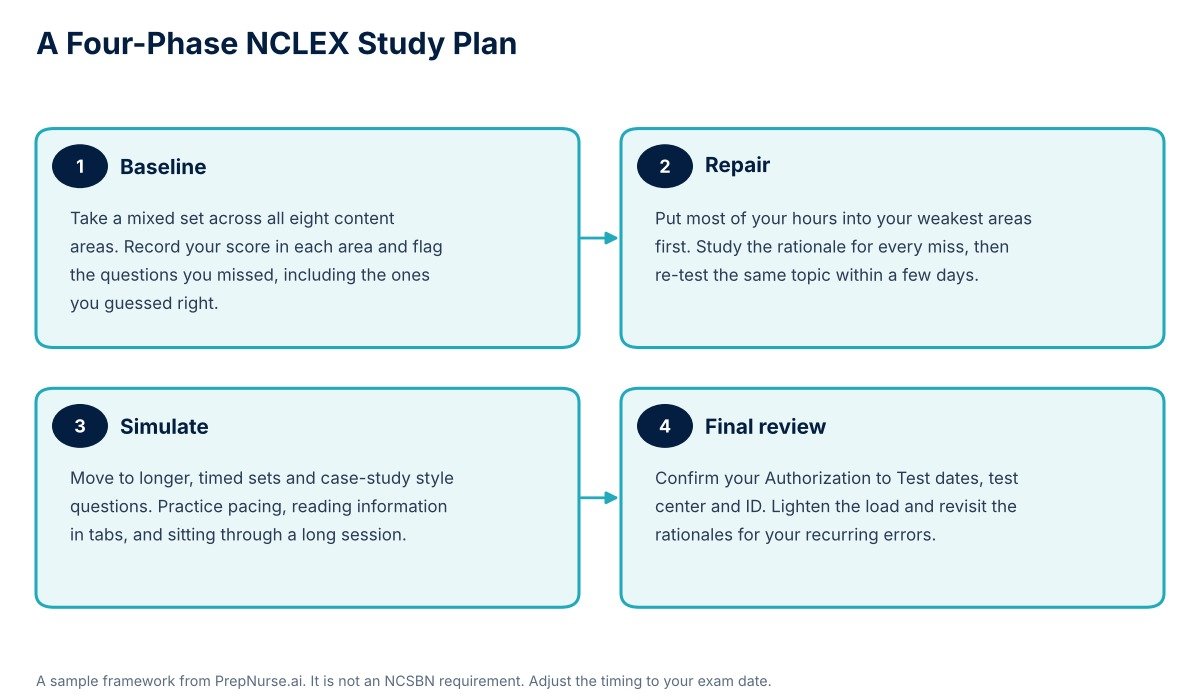
Good planning starts from the date you will test and works backward. Then it moves through four phases: a baseline, a repair period, exam simulation, and a final review. The phases overlap, and the time you give each one depends on how strong your baseline is and how many weeks you have.
Start Your NCLEX Study Plan From Your Exam Date
Before you pick a number of weeks, learn the scheduling rules. You register with Pearson VUE and apply to your nursing regulatory body, and your registration stays open for 365 days while you wait to be declared eligible. Once you are eligible you receive an Authorization to Test (ATT) email with validity dates. The average ATT lasts 90 days, the dates cannot be extended, and testing outside them means registering and paying again. Plan backward from the last day of your window, not the first.
Cancel or reschedule at least 24 business hours before your appointment, because a missed appointment forfeits the registration fee. The fee is $200 now, and NCSBN has announced that registrations completed on or after February 1, 2027 will cost $350. The registration date, not the exam date, decides which fee applies. Confirm the current rules on the official NCLEX FAQ.
Phase 1: Take a Baseline
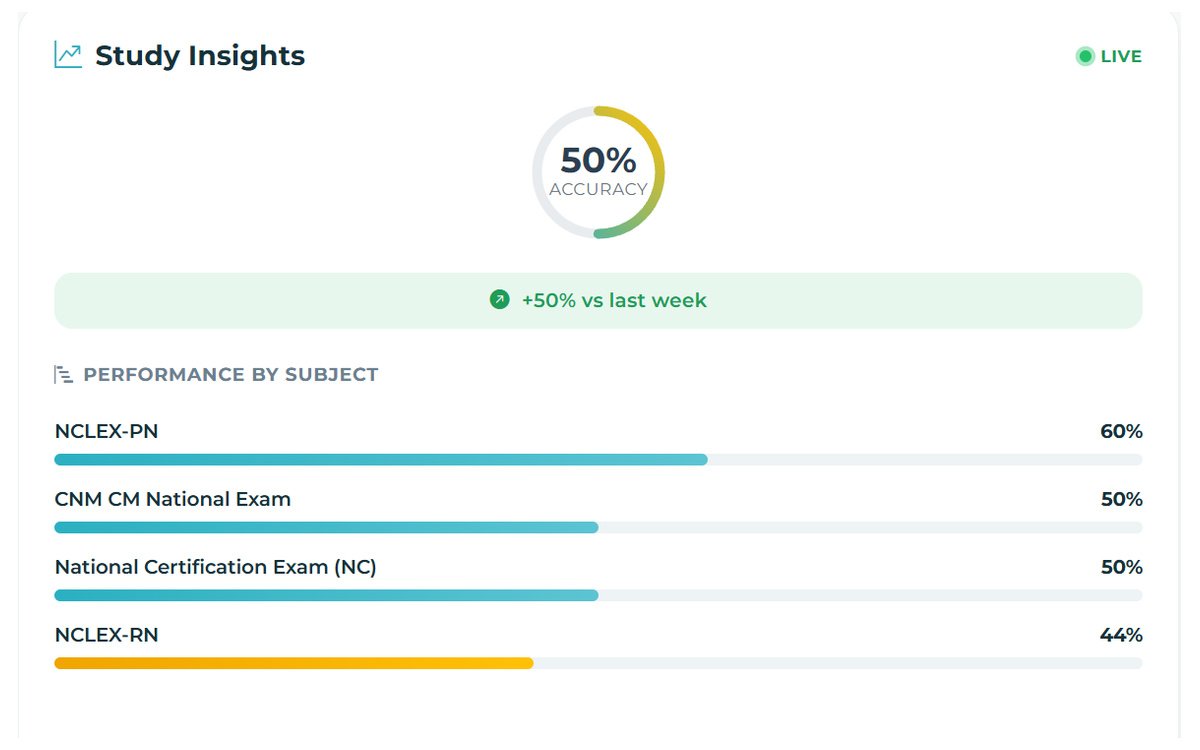
Begin with a mixed set of questions across every area of the exam, and note your results by subject. Count the questions you guessed correctly as misses for planning purposes, because a right answer reached for the wrong reason still hides a gap. A written baseline also gives you something to compare against at the end of your plan.
Phase 2: Repair Your Weak Areas
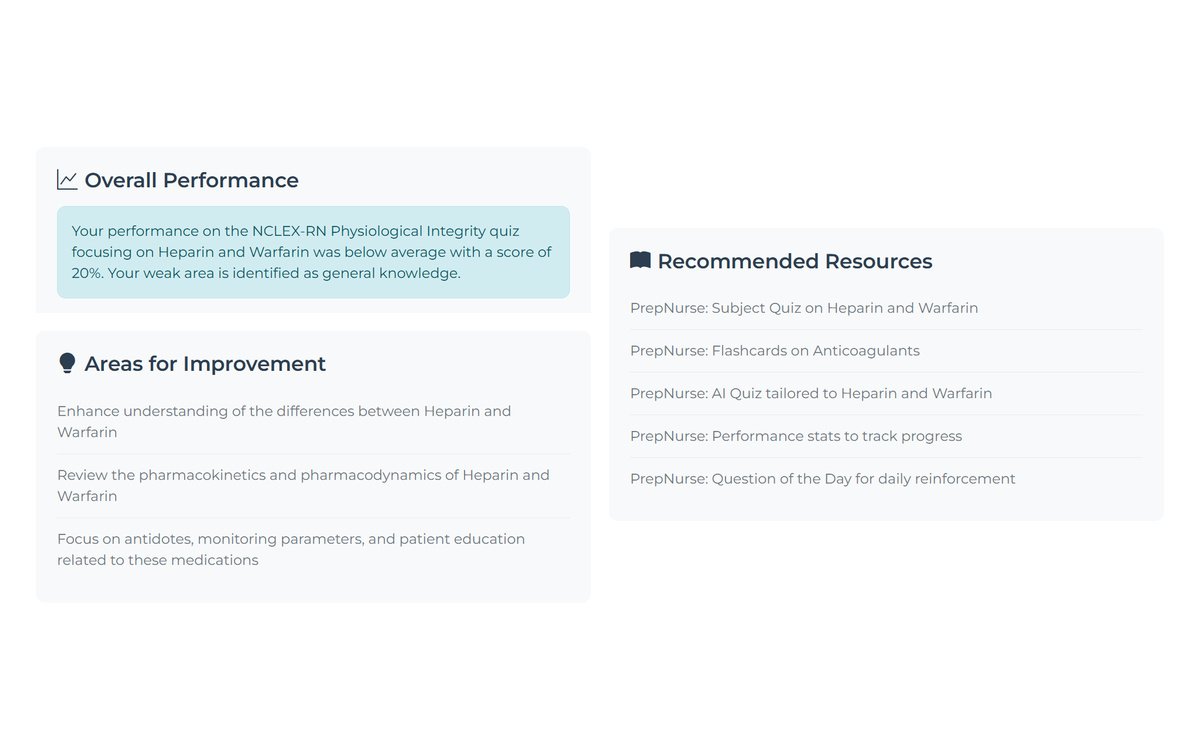
Spend most of your hours on the subjects where your baseline was weakest, starting with the ones that are also heavily tested. The test plan breakdown shows which content areas carry the most weight. For each miss, read the rationale, write the cue you overlooked in one sentence, and re-test the same topic within a few days.
Questions made on demand are useful here. The AI Quiz lets you choose a topic, a question count of 5, 10, 15, or 20, and a difficulty level, and you can run up to five sessions a day. Subject Quiz keeps every question inside one subject. Both are Premium modes, and you can compare them with the other quiz modes before you choose.
Keep a short error log while you repair. For every miss, record the topic, the cue you overlooked, and the rule that would have led you to the right answer. Review the log twice a week. After a month, patterns appear, such as always overlooking a medication contraindication or choosing the first reasonable action instead of the safest one. Those patterns are more useful than any single score, because they show you which habits to change.
Phase 3: Simulate the Exam
As the exam approaches, practice under conditions that resemble it. Use timed sets, sit for longer sessions, and practice reading client information in tabs the way case studies present it. The Timed Quiz mode lets you set your own limit from 1 to 100 minutes. Build comfort with the Next Generation question formats so the screen layout never costs you time.
Remember that the exam adapts, you cannot skip a question, and you cannot go back after confirming an answer. The length of your exam does not reveal whether you passed. Practicing with that in mind reduces the urge to count questions on test day.
Stamina is part of the exam. The five-hour limit includes breaks, so practice staying focused for long stretches and decide in advance when you will use a break. A candidate who has only practiced in twenty-minute bursts can run out of energy long before the computer has enough information to end the exam.
Phase 4: Final Review and Logistics
In the last week, lighten the load and revisit the rationales for the mistakes you keep repeating. Confirm your ATT dates, your test center, and your identification. Your ID must be valid, government-issued, not expired, and show a first and last name that match your ATT. Arriving prepared removes avoidable stress and protects the fee you paid.
A Sample NCLEX Study Schedule for Busy Weeks
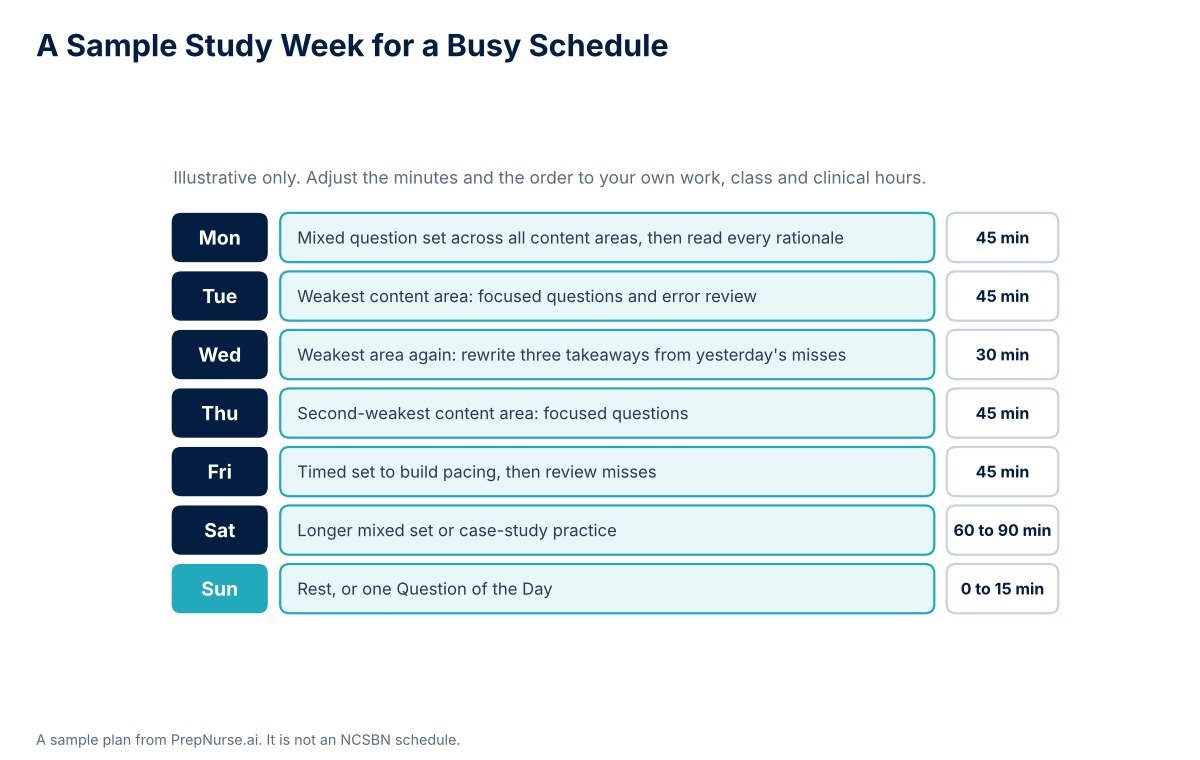
A study plan only works if it fits your actual week. This sample assumes weekday work, class, or clinical hours and a longer session on the weekend. Treat it as a template and change the minutes, the days, and the order to match your life.
Choosing the Right NCLEX Study Schedule Length
There is no official study length. A candidate who scores well on a baseline and tests soon needs a shorter, lighter plan than a candidate with several weak areas and a long ATT window. Let your baseline decide: the more content areas that need repair, the more of your plan belongs in Phase 2. Use the free Question of the Day on lighter days so the habit stays alive even when time is short.
What to Do When You Fall Behind
Every plan slips. When it does, shorten the plan instead of abandoning it. Drop the lowest-value session of the week, keep the weakest-area work, and reschedule the missed hours rather than stacking them all into one day. If you are running out of ATT window, talk to your board and Pearson VUE early, because the validity dates cannot be changed. A plan that bends is far more useful than a perfect plan that you abandon in week two.
Tailor the Plan to Your Exam
The framework works for both licensing exams, but the content differs. Registered nurse candidates can use the registered nurse exam overview to see the RN content areas and scoring rules.
Practical and vocational nurse candidates should use the practical nurse exam overview, because the PN test plan weights Coordinated Care, Psychosocial Integrity, and Pharmacological Therapies differently.
The free plan includes the Question of the Day plus Quick 10 and Quick 20 sets, while Premium adds the timed, AI, and subject modes plus the games. You can compare the free and Premium plans and decide what your plan needs.
The NCLEX preparation resources gather the exam guides in one place, so you can return to the format, scoring, and test plan details whenever your plan needs adjusting.
If you would like help fitting a plan to your own schedule, you can talk with the support team.
NCLEX Study Plan Frequently Asked Questions
How long should an NCLEX study plan be?
There is no official length. Your baseline results, your exam date, and the validity dates on your Authorization to Test should decide it. Candidates with several weak areas need more time in the repair phase, while strong candidates can spend more of their plan on simulation and final review.
When should I schedule my NCLEX exam?
You can schedule once you receive your Authorization to Test email. The average ATT is valid for 90 days and the dates cannot be extended, so choose an appointment inside that window that leaves enough time to finish your plan.
What happens if I cannot test within my ATT window?
You must test within the validity dates on your ATT. If you do not, you have to register again and pay another exam fee. NCSBN also notes that missing an appointment, or failing to cancel at least 24 business hours ahead, forfeits the registration fee.
Should I study every NCLEX content area equally?
No. The test plan gives each content area a different weight, and your own results show where your points are at risk. Study heavily tested areas where you are weak first, maintain strong areas with mixed practice, and give lightly tested areas steady but shorter sessions.
Can I use the same study plan for the NCLEX-RN and NCLEX-PN?
The framework of baseline, repair, simulation, and final review works for both exams. The content does not, because the RN and PN test plans have different content areas and percentages, so build your practice from the plan that matches your license.
Does the length of my exam tell me whether I passed?
No. NCSBN states that the number of questions you receive does not indicate a pass or fail result. The exam stops when the computer is 95% certain about your result after the minimum, or it continues to the maximum when your ability is close to the passing standard.
Start Practicing at Your Own Pace
A plan is easiest to follow when your practice tells you what to do next. PrepNurse.ai offers a free plan that needs no credit card, so you can take your first questions, read the rationales, and start building your baseline today.
PrepNurse.ai is an independent study resource and is not affiliated with or endorsed by NCSBN. NCLEX®, NCLEX-RN®, and NCLEX-PN® are registered trademarks of NCSBN. PrepNurse.ai is a study aid and does not guarantee an exam result.